
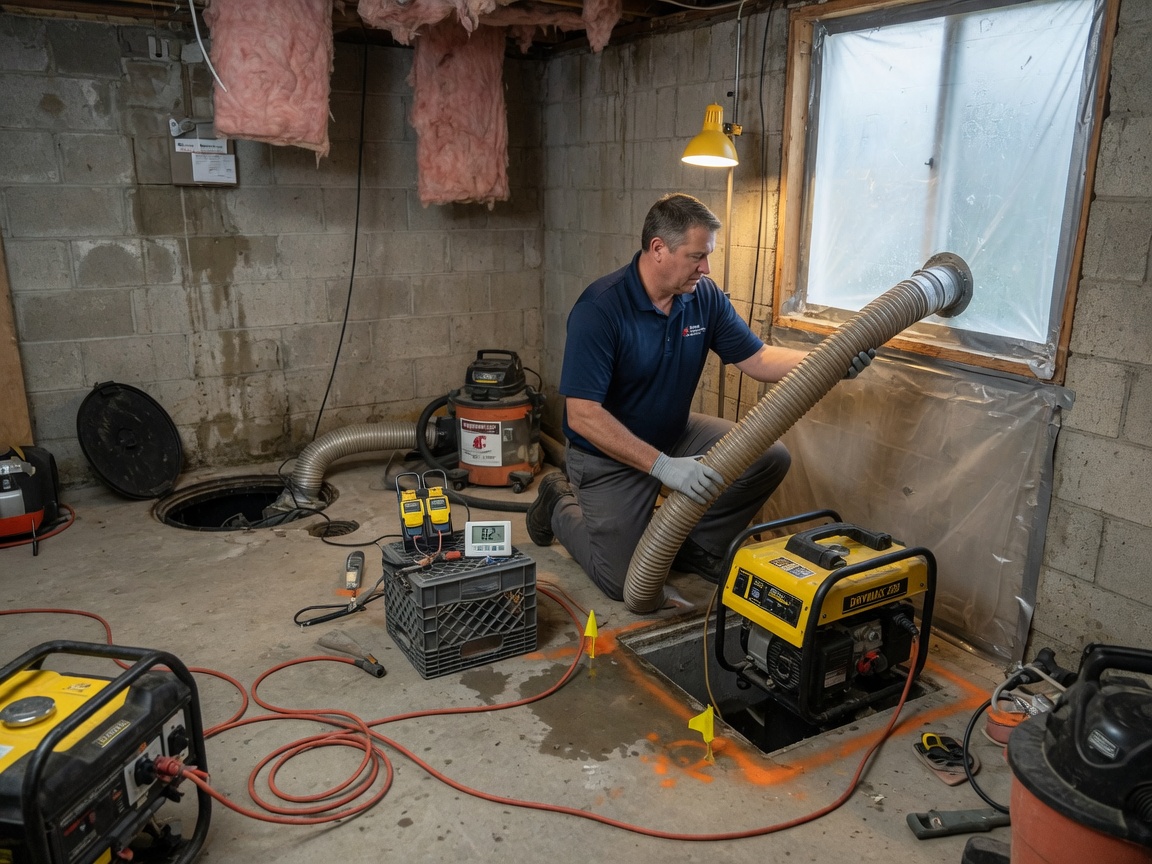
Removing visible water is only the first step in restoring a property after a leak or flood. In Spokane, cold, snowy winters and warm summers can create humidity fluctuations that leave moisture trapped inside walls, subfloors, and attics. Our dehumidification services use professional drying equipment selected according to the size of the affected space, moisture conditions, and building materials. Low-grain refrigerant and desiccant dehumidifiers help remove excess moisture, while strategically placed air movers improve airflow across wet surfaces and support the drying process.
Older homes in Browne’s Addition and the Perry District may contain plaster walls and balloon framing that allow water to travel beyond the original leak. Ice-dam meltwater can also move along roof sheathing and saturate attic insulation during spring thaws. These concealed moisture pockets require careful monitoring and targeted drying. Our structural drying process helps address moisture within building materials, while attic water damage cleanup may be necessary when roof leaks affect insulation or attic spaces. Equipment run time and configuration depend on indoor conditions, material type, and moisture levels rather than a fixed schedule.
Technicians use pin and pinless moisture meters to record readings at multiple depths and adjust equipment placement as drying progresses. This helps reduce the risk of over-drying delicate hardwoods while ensuring carpet padding and other concealed materials receive appropriate attention. Our moisture mapping and measurement service helps track moisture conditions and identify areas that may need additional drying before reconstruction. When flooring or other porous materials have sustained water damage, carpet and flooring water damage restoration may also be required.
Before rebuilding begins, affected materials should meet appropriate drying goals for their type and condition. We document moisture readings and drying progress to support restoration records and help identify unresolved moisture concerns. If a leak or flood has affected your property, our water damage inspection can help determine the extent of the damage and guide the next steps. We provide drying and restoration support for properties in Browne’s Addition and the Perry District, with recommendations tailored to the building and the conditions found on site.
Dehumidification Services We Offer
✓Refrigerant Dehumidification
High-capacity LGR units pull moisture from warm summer air in South Hill basements and crawl spaces, reducing humidity to safe levels before mold sets in.
✓Desiccant Dehumidification
Desiccant machines handle cold winter drying in Downtown Spokane warehouses where refrigerant units lose efficiency, pulling moisture even at low temperatures.
✓Moisture Mapping and Monitoring
Daily meter readings and thermal imaging track hidden water behind drywall in Riverfront Park area homes, guiding equipment adjustments until readings stabilize.
✓Air Mover and Containment Setup
Strategic placement of air movers creates directed airflow across wet materials while plastic containment prevents cross-contamination to unaffected rooms.
✓Post-Drying Verification
Final moisture audits and documentation confirm all materials meet drying standards before reconstruction begins in Manito Park neighborhood properties.
Dehumidification Cost in Spokane, WA
| Service | Typical Range | What Affects It |
|---|---|---|
| Initial Moisture Assessment | $125–$225 | Includes meter readings and written report |
| Residential Dehumidification (per day) | $175–$350 | One to two rooms; larger homes require multiple units |
| Commercial Dehumidification (per day) | $400–$750 | Larger spaces or multiple floors increase cost |
| Daily Monitoring Visit | $75–$125 | Includes equipment adjustment and updated readings |
Ranges are typical for Spokane, WA and confirmed with an exact written quote before any work starts.
How it works
- 1
On-Site Moisture Assessment
Technicians arrive with meters and thermal cameras to locate all wet materials and calculate equipment needs based on square footage and material types.
- 2
Equipment Deployment
Dehumidifiers, air movers, and containment barriers are positioned for maximum moisture removal while protecting unaffected areas of the home.
- 3
Daily Monitoring And Adjustment
Readings are taken every 24 hours; equipment is repositioned or added as moisture levels drop to maintain efficient drying.
- 4
Final Verification And Documentation
Once target humidity is reached, a written report with before-and-after readings is provided for insurance and reconstruction planning.
Pricing
Pricing varies by affected square footage, number of rooms, and required drying duration.