
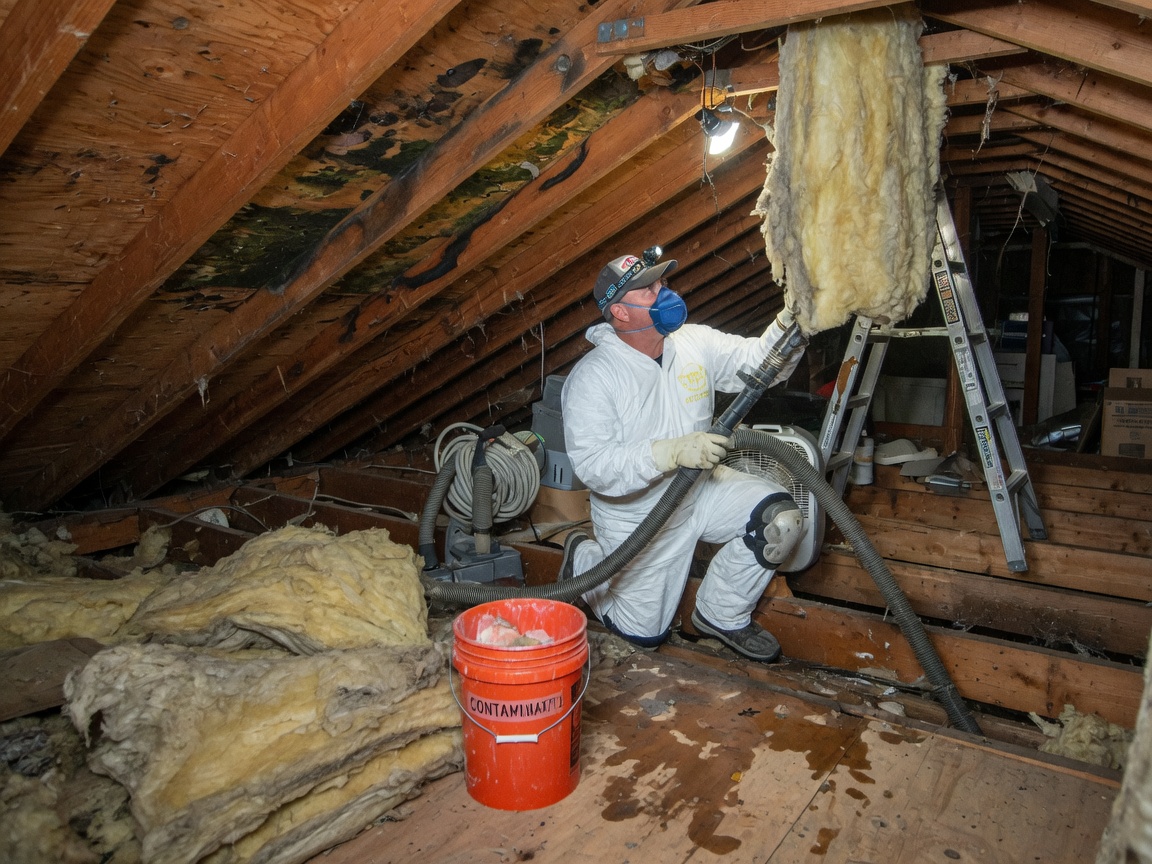
Hidden attic moisture can lead to insulation damage, wood deterioration, and mold growth if it is not addressed promptly. In Spokane, cold, snowy winters create conditions for ice dams, especially in neighborhoods like South Hill and Browne's Addition. Along rooflines near Spokane Falls, melting ice can force water beneath shingles and into attic insulation, leaving moisture pockets that ordinary drying methods may miss. Our attic water damage cleanup service addresses saturated materials, removes standing water from accessible cavities, and uses commercial dehumidifiers suited to the confined spaces found in older Perry District homes. Proper airflow management also helps reduce condensation as temperatures shift into warmer summer weather.
Attic moisture can linger behind roof sheathing and along collar ties, creating conditions that may support mold growth. In homes around Riverfront Park, we inspect areas where moisture may collect and assess hidden damage before reconstruction begins. If mold is discovered, mold remediation may be needed to address affected materials. When water has spread beyond the attic, our moisture mapping and measurement helps identify damp areas that require additional attention. If damage affects load-bearing components, we coordinate with licensed carpenters as needed and document the restoration process for insurance records. Access through finished ceilings requires appropriate dust containment and careful repairs to help prevent further disruption downstairs.
Spokane's seasonal weather means both spring snowmelt and summer thunderstorms can contribute to attic water intrusion throughout the county. We evaluate ventilation, insulation, and vapor-control conditions based on the home's construction rather than relying on generic recommendations. When roof damage is the source, roof leak water damage repair may be necessary to help prevent recurring moisture problems. Our structural drying process helps address moisture in affected building materials, while dehumidification supports controlled drying throughout the restoration process.
Every project includes moisture documentation to help determine when affected materials are ready for reconstruction. We use moisture readings and site conditions to guide drying goals rather than relying on a single percentage for every material. Homeowners in South Hill and Browne's Addition receive clear information about affected areas, completed work, and recommended next steps before insulation and other materials are replaced.
Attic Water Damage Cleanup Services We Offer
✓Ice Dam Water Extraction
Targeted removal of meltwater trapped behind ice dams common after Spokane's snowy winters, followed by drying of rafters and sheathing.
✓Saturated Insulation Removal
Full extraction of wet fiberglass or cellulose from attic floors and walls with proper disposal to stop ongoing mold risk in South Hill homes.
✓Attic Mold Remediation
Containment, HEPA vacuuming, and antimicrobial treatment of colonies that form when roof leaks meet warm summer air in Spokane attics.
✓Structural Drying and Monitoring
Placement of air movers and moisture meters on trusses and plywood until readings stay under fifteen percent across multiple days.
✓Vapor Barrier Replacement
Installation of new six-mil poly sheeting and sealed seams to block future moisture migration in older Downtown Spokane properties.
Attic Water Damage Cleanup Cost in Spokane, WA
| Service | Typical Range | What Affects It |
|---|---|---|
| Initial On-Site Assessment | Free | Includes moisture readings and written scope for Spokane County claims. |
| Small Localized Cleanup | $650–$1,200 | One affected bay, insulation removal, and three-day drying. |
| Full Attic Restoration | $1,800–$3,400 | Multiple bays, mold treatment, new insulation, and ventilation work. |
| Ice Dam Follow-Up Drying | $450–$850 | Equipment and monitoring after roof repairs are complete. |
Ranges are typical for Spokane, WA and confirmed with an exact written quote before any work starts.
How it works
- 1
Detailed Attic Inspection
We access the space through existing openings or small inspection cuts, map all wet zones with infrared and pin meters, and note any compromised rafters before work starts.
- 2
Water Extraction and Material Removal
Standing water is pumped out, saturated insulation and drywall are bagged and removed, and debris is hauled away the same day to keep spores from spreading.
- 3
Forced Drying and Daily Monitoring
Commercial equipment runs until moisture levels stabilize, with readings logged each visit so homeowners see documented progress.
- 4
Restoration and Prevention Upgrades
New insulation and ventilation are installed, and simple ridge or gable vent improvements are added to reduce future ice dam risk.
Pricing
Most attic jobs are priced after an on-site inspection because access, extent of insulation saturation, and any structural involvement change the scope.