
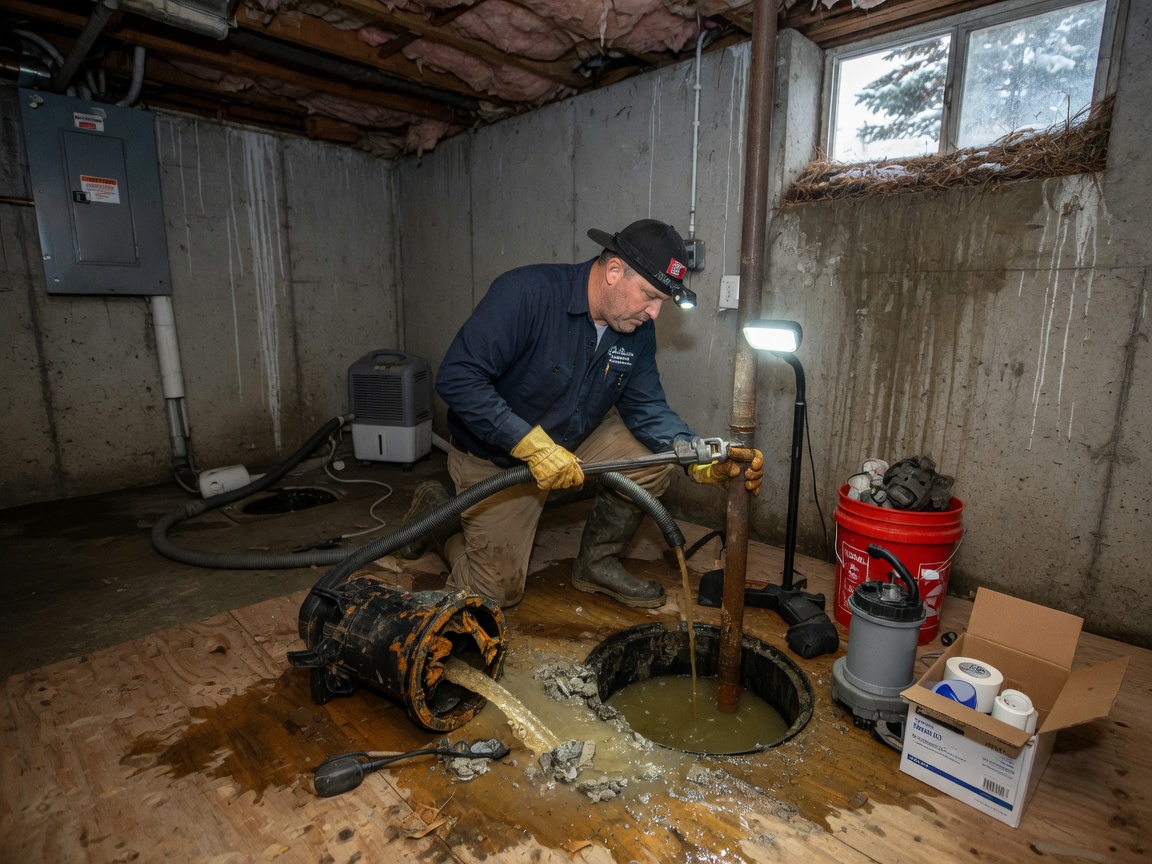
Sump pump failure in Spokane can happen during heavy winter storms, power outages, or periods of increased groundwater from spring snowmelt. In older South Hill and Browne’s Addition homes, a failed pump can allow water to collect in the basement, especially where gravity drainage is limited. If the water level rises, finished flooring, drywall, and stored belongings may quickly become affected. Professional sump pump failure cleanup helps address the resulting water intrusion through water extraction, moisture assessment, and appropriate drying. Once the immediate flooding is under control, the pump and discharge system should be inspected to identify the cause of the failure.
Some Spokane properties may experience frozen discharge lines near Manito Park or aging sump components in older Perry District homes. A blocked discharge pipe, damaged check valve, clogged float switch, or worn pump can interfere with proper operation. Technicians can inspect the basin, discharge line, and pump components to determine whether repair or replacement is appropriate. Battery backup options may also be considered for properties vulnerable to power interruptions, with capacity selected according to the system and expected operating conditions. If flooding has already occurred, basement flooding cleanup and water removal can help address standing water and reduce further damage.
Electrical components around a sump system require particular care. If water has reached an outlet, pump wiring, or other electrical equipment, avoid contact and arrange for a qualified professional to assess the area before using the system again. Routine inspection of the pump, float switch, check valve, and discharge line can help identify potential issues before the next period of heavy rainfall or snowmelt.
Seasonal Sump Pump Maintenance in Spokane
Homeowners in Downtown Spokane and along the river corridor may benefit from checking their sump systems before spring snowmelt increases groundwater levels. A properly selected pump, functioning discharge line, and high-water alarm can help reduce the risk of unexpected basement flooding. Backup power may provide additional protection during outages, but performance depends on the backup system’s capacity and condition.
If a sump pump failure allows water into a property, prompt water damage inspection and moisture mapping and measurement can help locate moisture in flooring, walls, and other building materials. After extraction, structural drying may be needed to address residual moisture and help prevent secondary damage. Taking care of both the pump issue and the resulting water damage helps Spokane property owners plan a more complete recovery.
Sump Pump Failure Services We Offer
✓Emergency Sump Pump Replacement
Same-day removal and installation of new submersible or pedestal pumps sized for your pit volume and Spokane winter load.
✓Battery Backup Installation
Mounting and wiring of 12-volt systems that keep the pump running during outages common after heavy snow on the South Hill.
✓Float Switch and Sensor Repair
Diagnosis and replacement of stuck or corroded float switches and electronic sensors that cause pumps to fail silently.
✓Sump Pit Cleaning and Liner Replacement
Removal of sediment and installation of new sealed liners that prevent groundwater seepage around older concrete pits.
✓Winter Discharge Line Thaw and Protection
Clearing frozen lines and adding insulation or heat tape to prevent ice blockages that back water into basements.
Sump Pump Failure Cost in Spokane, WA
| Service | Typical Range | What Affects It |
|---|---|---|
| Sump Pump Replacement | $650–$1,250 | Varies by horsepower and whether battery backup is added |
| Battery Backup System | $350–$650 | Includes battery and charger; higher for extended runtime models |
| Float Switch Replacement | $175–$325 | Electronic sensors cost more than mechanical floats |
| Pit Cleaning And Liner | $400–$750 | Depends on sediment volume and liner material |
Ranges are typical for Spokane, WA and confirmed with an exact written quote before any work starts.
How it works
- 1
On-Site Assessment
We arrive within two hours, measure pit dimensions, test power supply, and check for frozen discharge lines.
- 2
Water Removal
Portable extractors pull standing water while we locate and correct the source of the failure.
- 3
Component Repair Or Replacement
We swap the pump, switch, or backup battery on the spot using stock sized for local homes.
- 4
System Test And Alarm Setup
Full cycle test plus optional high-water alarm installation before we leave the property.
Pricing
Upfront written quotes provided on site after inspection; no hidden fees.