
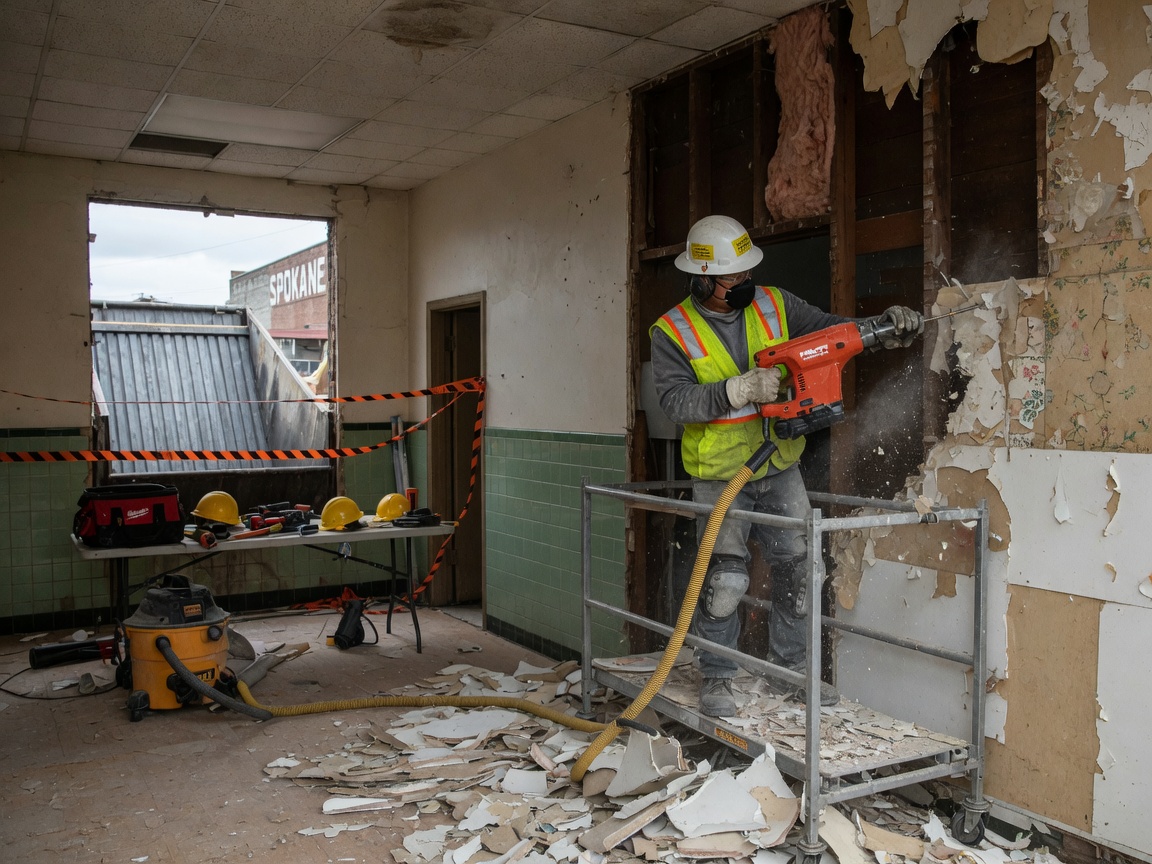
Selective demolition focuses on removing only water-damaged materials while preserving unaffected drywall, framing, and finishes whenever possible. During Spokane’s cold winters, freeze-thaw conditions and plumbing leaks can allow moisture to spread behind baseboards and into wall cavities. In homes throughout Browne’s Addition and the Perry District, careful inspection helps identify the extent of concealed damage before removal begins. Technicians use moisture readings to guide the work, while dust containment and negative-air equipment can help limit debris from spreading into unaffected areas. This targeted approach is an important part of selective demolition after water intrusion.
Some properties require extra care because of their construction or flooring materials. In South Hill homes, water may travel beneath hardwood flooring while leaving portions of the subfloor less affected. Historic Downtown Spokane buildings may also have lath-and-plaster ceilings that require controlled removal in smaller sections. The demolition plan should account for the condition of the materials, potential safety concerns, and applicable disposal requirements. When water-damaged materials cannot be adequately dried or restored, selective removal can prepare the area for structural drying and necessary repairs without removing more than the damage requires.
Moisture Assessment Before Demolition
Before demolition begins, technicians can document moisture readings throughout the affected rooms and identify areas where materials may need to be removed. Marking the boundaries of damaged drywall, insulation, or flooring helps keep the work focused and supports a more organized restoration process. This assessment may include moisture mapping and measurement to locate hidden saturation and determine where additional inspection is needed.
Selective demolition can also help Spokane property owners maintain clearer records of the damage. Photos, moisture readings, and notes about removed versus retained materials may support insurance discussions and help guide reconstruction planning. For homes and commercial properties near Riverfront Park and throughout Spokane, combining targeted removal with water damage inspection and water damage cleanup can help prepare affected spaces for the next stage of restoration.
Selective Demolition Services We Offer
✓Selective Drywall Removal
Removes only water-saturated drywall sections while leaving stable walls intact, reducing rebuild scope in Spokane homes.
✓Damaged Insulation Extraction
Extracts wet or moldy insulation from wall and ceiling cavities without disturbing unaffected areas.
✓Flooring Demolition
Cuts and removes water-damaged carpet, laminate, or hardwood in targeted zones to protect subfloors.
✓Ceiling Demolition
Performs limited ceiling removal in leak paths while supporting surrounding plaster or drywall.
✓Baseboard and Trim Removal
Takes out moisture-affected trim to allow drying and prevent hidden mold growth behind surfaces.
Selective Demolition Cost in Spokane, WA
| Service | Typical Range | What Affects It |
|---|---|---|
| Selective drywall removal per room | $250–$650 | Varies with wall height and hidden damage extent |
| Flooring demolition per 100 sq ft | $180–$450 | Higher for hardwood or multi-layer installs |
| Insulation extraction per wall cavity | $75–$200 | Depends on depth and mold presence |
Ranges are typical for Spokane, WA and confirmed with an exact written quote before any work starts.
How it works
- 1
Moisture Mapping
Technicians document affected areas with meters and infrared scans to define exact demolition boundaries.
- 2
Containment Setup
Plastic barriers and negative air machines isolate the work zone from the rest of the Spokane property.
- 3
Targeted Removal
Only damaged materials are cut and extracted using hand tools to avoid vibration damage to sound structures.
- 4
Debris Removal and Site Protection
All debris is bagged and removed, then exposed cavities are left ready for drying equipment.
Pricing
Costs depend on square footage affected, material types, and access in older Spokane homes.