
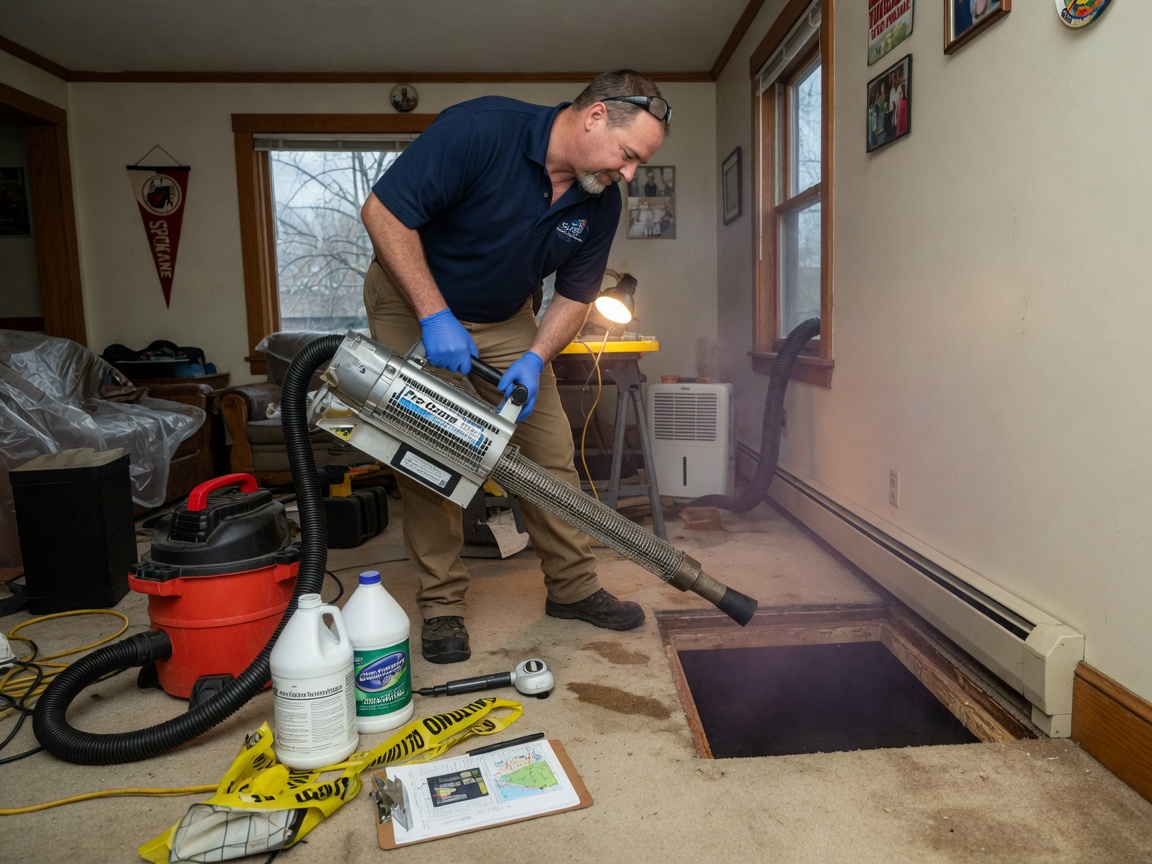
Water damage in Spokane County can leave behind stubborn musty odors that linger in drywall, subfloors, insulation, and other porous materials. Spring snowmelt, summer storms, and plumbing leaks can allow moisture to collect in areas that are difficult to see or reach. Professional odor removal begins with identifying the moisture source rather than simply covering up unpleasant smells. Technicians may use moisture meters, thermal imaging, and a detailed water damage inspection to locate hidden dampness before determining the appropriate cleanup and treatment methods.
In Browne's Addition and the Perry District, older homes may have plaster walls, aging flooring, or other materials that require careful handling during restoration. If moisture remains behind these surfaces, odors can return when indoor conditions change during Spokane’s cold, snowy winters. Targeted structural drying and appropriate deodorization methods can help address affected areas while reducing the risk of moisture becoming trapped during repairs.
Odors can also travel through ductwork or spread into adjacent rooms, particularly in properties near Riverfront Park or Manito Park that have experienced water intrusion. Depending on the source and extent of contamination, restoration crews may isolate affected areas and use air scrubbers with activated carbon as part of the cleanup process. When necessary, moisture mapping and measurement can help identify damp areas that may otherwise be overlooked. Proper drying and follow-up assessment are important because lingering moisture can contribute to recurring odors and additional damage.
Saturated building materials may need to be removed and handled appropriately when they cannot be safely dried or restored. Disposal requirements can depend on the material and type of contamination, so property owners should confirm applicable local requirements rather than assume all water-damaged materials follow the same process. Homeowners should also avoid operating ozone-generating devices in occupied spaces, as ozone can irritate the respiratory system and may damage certain materials. For properties throughout South Hill and Spokane County, professional water damage cleanup, targeted deodorization, and appropriate post-remediation verification can help address the underlying cause of persistent odors instead of masking the smell temporarily.
Odor Removal Services We Offer
✓Musty Odor Elimination
Removes damp, earthy smells trapped in carpets and baseboards after leaks using enzyme cleaners and air circulation that reach hidden cavities.
✓Sewage Backup Odor Removal
Neutralizes strong waste odors from flooded basements with hospital-grade disinfectants and negative air machines to protect Spokane County residences.
✓Smoke and Soot Odor Treatment
Addresses lingering combustion smells that mix with water damage using thermal fogging and surface sealants suited for older homes in Downtown Spokane.
✓Pet Odor Remediation
Targets urine and dander odors amplified by moisture in subfloors with bio-enzyme solutions that break down proteins without harsh chemicals.
✓Mold Odor Control
Eliminates musty fungal smells after water intrusion by combining antimicrobial fogging with HEPA filtration to safeguard air quality in South Hill properties.
Odor Removal Cost in Spokane, WA
| Service | Typical Range | What Affects It |
|---|---|---|
| Initial Odor Assessment | $75–$150 | Includes inspection; waived with full service in Spokane County |
| Single Room Odor Removal | $250–$450 | Typical for water-damaged carpet and drywall areas |
| Whole Home Treatment | $800–$1,600 | Varies with HVAC involvement and multi-story homes |
| Sewage Odor Specialization | $400–$900 | Extra for biohazard protocols and disposal |
Ranges are typical for Spokane, WA and confirmed with an exact written quote before any work starts.
How it works
- 1
Detailed Inspection
Technicians map moisture sources and odor pathways using meters and scopes at your Spokane address.
- 2
Source Containment
Affected rooms are isolated with plastic barriers and negative pressure to stop odor migration.
- 3
Odor Neutralization
Enzyme treatments, hydroxyl generators, and vapor deodorizers break down odor molecules at the source.
- 4
Air Quality Verification
Post-treatment sampling confirms odors are gone before final cleanup and drying.
Pricing
Costs depend on square footage, odor source depth, and equipment hours required.