
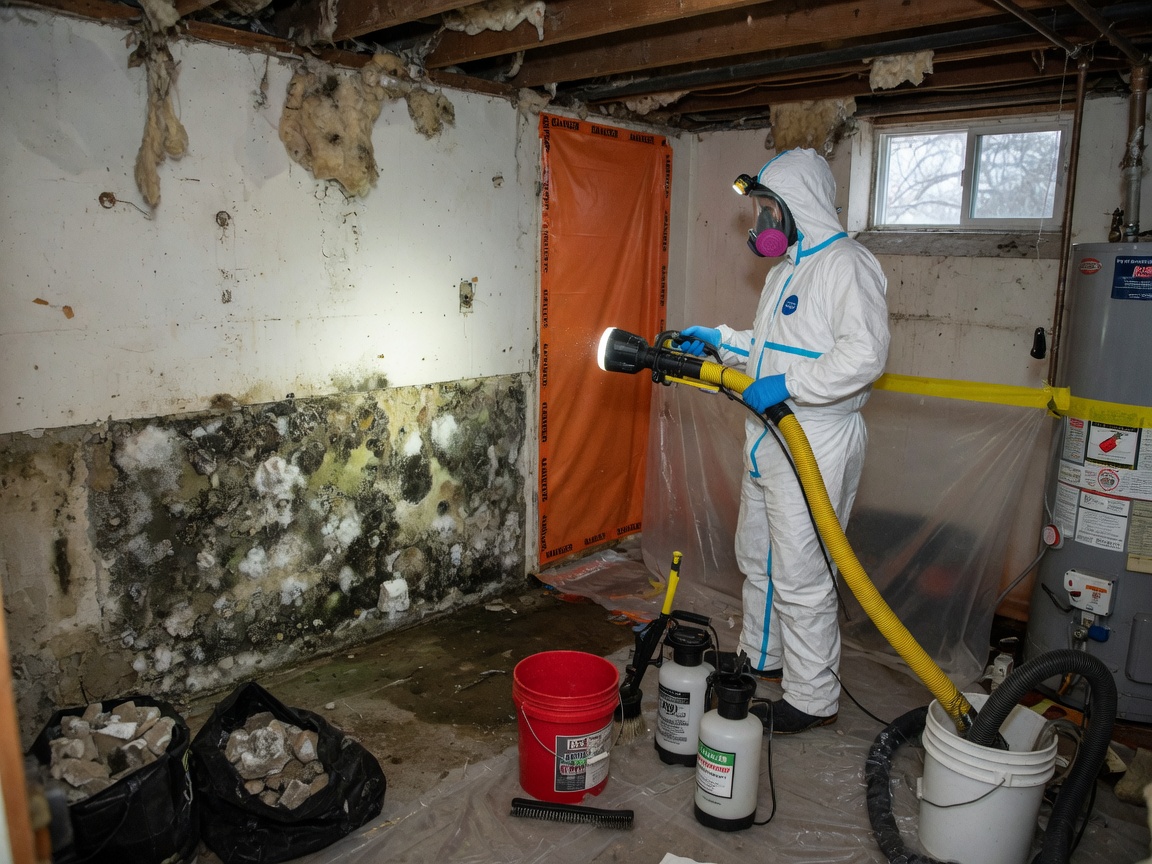
Spokane's four distinct seasons create specific mold risks. Cold, snowy winters drive moisture into attics and crawl spaces, while warm summers can accelerate mold growth as temperatures rise. Homes in South Hill and Browne's Addition often have older basements and poor ventilation that trap humidity after roof leaks or pipe bursts near Spokane Falls. We begin every job with moisture mapping and measurement and water damage inspection to locate hidden moisture and assess potential mold growth behind drywall or under flooring before removal begins.
Containment is critical in occupied spaces. We use negative air machines with HEPA filtration and physical barriers to help keep spores from spreading into living areas or HVAC systems. In Perry District properties with tight floor plans, this step helps prevent cross-contamination to adjacent rooms. Porous materials showing visible mold growth are removed and bagged on site, while non-porous surfaces receive appropriate antimicrobial treatment followed by HEPA vacuuming. Our mold remediation process includes documenting the work with photos to support insurance records and applicable compliance requirements.
Drying follows removal. Industrial air movers and dehumidifiers run while moisture levels are monitored and adjusted to appropriate drying goals for the affected materials and indoor conditions. Spokane County winters can slow this process when outdoor temperatures stay below freezing, so we monitor progress daily and adjust equipment placement as needed. Structural drying helps address remaining moisture in building materials, while post-remediation verification can help confirm that remediation goals have been met before containment barriers come down.
We also address the moisture source. After remediation, we provide written recommendations for ventilation upgrades or drainage fixes that may help prevent recurrence in Spokane's variable climate. If the mold resulted from a roof leak or plumbing issue, roof leak water damage repair or burst pipe repair may also be necessary. We serve homeowners in South Hill and Browne's Addition. Work is scheduled around the shop hours at 1211 W Northwest Blvd, so homeowners can reach us directly Monday through Friday, 8 a.m. to 6 p.m., or Saturday mornings.
Mold Remediation Services We Offer
✓Attic Mold Remediation
Remove mold colonies in attics caused by roof leaks or ice dams common after Spokane winters, with full insulation replacement and ventilation upgrades.
✓Basement Mold Removal
Treat below-grade growth in South Hill and Downtown Spokane homes after sump pump failures or groundwater intrusion, including wall cavity cleaning and dehumidification.
✓Black Mold Treatment
Handle Stachybotrys and other toxic species with strict containment and disposal protocols required for health-sensitive households in Spokane County.
✓Post-Flood Mold Remediation
Clean and dry structures after Riverfront Park area flooding or heavy rain events, focusing on hidden growth in subfloors and behind baseboards.
✓HVAC Mold Cleaning
Inspect and sanitize ductwork and coils where spores circulate through forced-air systems in older Perry District and Browne's Addition properties.
Mold Remediation Cost in Spokane, WA
| Service | Typical Range | What Affects It |
|---|---|---|
| Initial Inspection and Testing | $175–$350 | Includes moisture mapping and air sampling; larger homes or multiple stories increase the upper end. |
| Small Area Containment and Removal | $800–$1,600 | Covers up to 100 sq ft; hidden growth behind walls adds labor and disposal fees. |
| Whole-Room or Basement Remediation | $2,200–$4,800 | Includes drying equipment and final testing; extent of demolition and material disposal drives the price. |
| HVAC System Cleaning | $450–$950 | Duct inspection and coil treatment; older systems with multiple returns cost more. |
Ranges are typical for Spokane, WA and confirmed with an exact written quote before any work starts.
How it works
- 1
Inspection and Testing
We perform moisture mapping, thermal imaging and air or surface sampling to identify all affected areas and mold types.
- 2
Containment Setup
Negative air pressure and physical barriers isolate the work zone to prevent spore migration to clean spaces.
- 3
Removal and Cleaning
Damaged porous materials are removed; non-porous surfaces receive HEPA vacuuming and antimicrobial treatment.
- 4
Drying and Clearance
Equipment dries the structure to safe levels followed by post-remediation testing before barriers are removed.
Pricing
Costs depend on square footage affected, material types and whether hidden cavities require demolition; an on-site assessment provides the accurate range.