
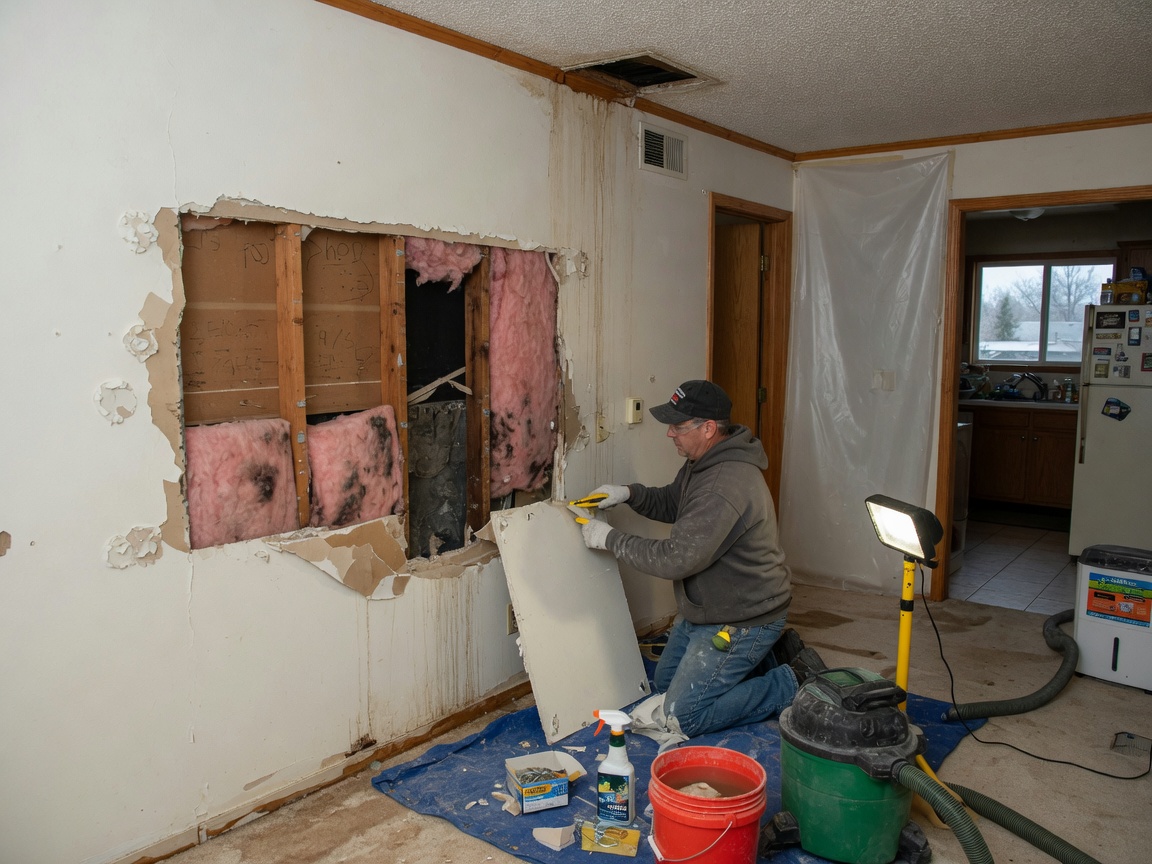
Post Falls sits right along the Spokane River, where spring snowmelt and sudden storms push water into basements and crawl spaces faster than in many other parts of the county. Homes along Seltice Way and near the old mill district often see water enter through older foundations or around window wells after heavy runoff. Our Spokane-based team crosses the state line on I-90 and reaches these addresses quickly, bringing extraction equipment sized for river-adjacent properties.
Newer subdivisions east of Highway 41 and older stock near Treaty Rock both face different risks. Newer homes can trap water behind vinyl siding when downspouts are blocked by pine needles, while pre-1980 houses frequently have clay tile drains that collapse. We map each lot before we start so we know where the water is traveling and how to stop it from reaching living areas.
Winter pipe freezes are common once temperatures drop below zero for several nights. We keep dehumidifiers and air movers staged in Spokane so we can set up drying chambers the same day we arrive in Post Falls, cutting down the chance of mold in insulated walls.
Around Post Falls, ID
We regularly work near:
- 📍Q'emlin Park
- 📍Post Falls Dam
- 📍Treaty Rock Park
- 📍Post Falls High School
- 📍Centennial Trail
- 📍Seltice Way
Water Damage Restoration in Post Falls, ID — Local Notes
- •Many Post Falls homes built before 1990 sit on lots with minimal slope toward the river, so water pools against foundations during snowmelt.
- •Proximity to the Post Falls Dam means sudden water releases can raise river levels and affect nearby streets within hours.
- •Newer subdivisions off Prairie Avenue often have French drains that clog with fine silt from the lake bed, requiring targeted excavation.
- •I-90 access lets our crews reach most Post Falls addresses in under 30 minutes from our Northwest Blvd location, even during rush hour.