
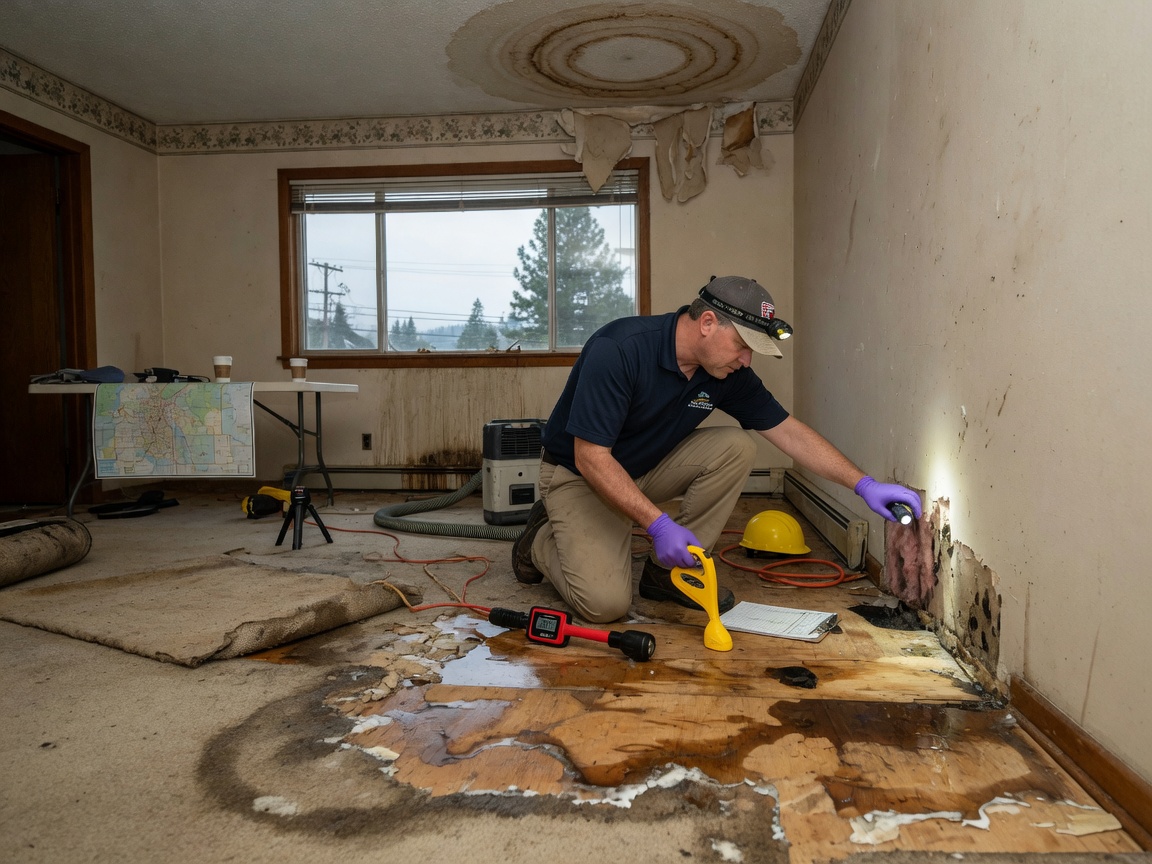
Mead sits north of downtown Spokane with a mix of 1970s–1990s homes on larger lots that back up to the Little Spokane River drainage. When spring snowmelt or heavy summer storms hit, water often finds its way into crawlspaces and daylight basements along streets like Hastings Road and Farwell Road. Water Damage Lilac City Experts responds from our Northwest Blvd location to stop the spread before mold sets in the older particleboard subfloors common here.
We stage equipment at the job site the same day because Mead properties sit outside the city’s main storm-sewer grid. That means private ditches and swales fill fast. Our trucks carry extra subfloor drying fans and moisture meters calibrated for the clay-heavy soil that traps water against foundations in this neighborhood.
Homeowners near Mead High School and Mt. Spokane High School know the drill: call early, before the next cold snap locks moisture inside walls. We extract, dry, and document every step so insurance adjusters see exactly what happened on your lot.
Around Mead
We regularly work near:
- 📍Mead High School
- 📍Mt. Spokane High School
- 📍Little Spokane River
- 📍North Spokane Corridor
- 📍Hastings Road
Water Damage Restoration in Mead — Local Notes
- •Many Mead crawlspaces lack vapor barriers and sit on clay that holds meltwater against footings for weeks.
- •Driveways off Hastings Road and Perry Street often slope toward garages, sending runoff straight into finished basements.
- •Winter access can be limited by snow on private gravel roads; we keep a four-wheel-drive extraction unit ready year-round.
- •Homes built before 1990 frequently have particleboard subfloors that delaminate after just 48 hours of standing water.